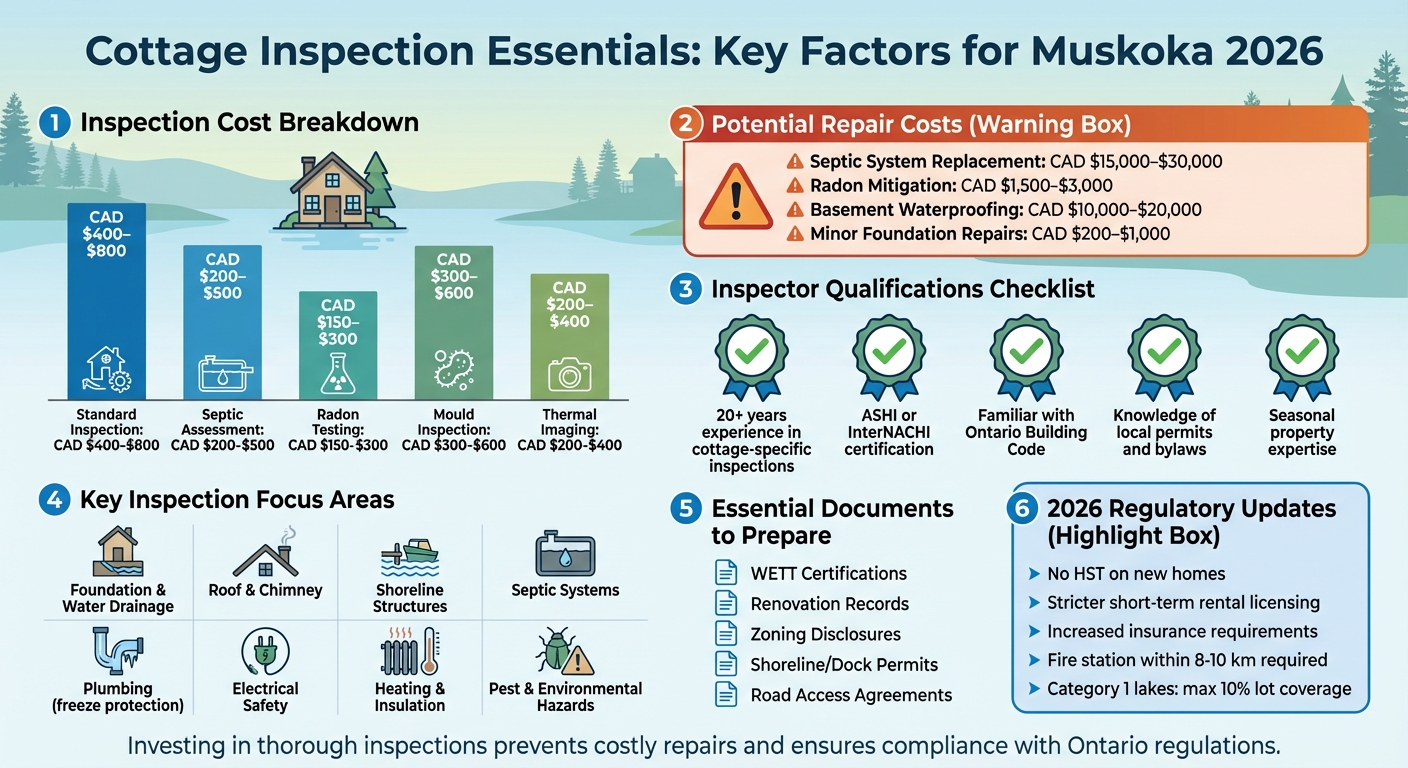
Buying a cottage in Ontario, especially in Muskoka, now involves more detailed inspections due to new regulations, market changes, and environmental challenges. Key updates for 2026 include no HST on new homes, stricter short-term rental licensing, and increased insurance requirements. Inspections are critical to avoid costly repairs and ensure compliance with updated codes. Here's what you need to know:
- Documents to Prepare: WETT certifications, renovation records, zoning disclosures, and shoreline permits.
- Inspection Focus Areas: Foundation, roof, shoreline stability, septic systems, plumbing, and electrical safety.
- Specialized Assessments: Septic (CAD $200–$500), radon (CAD $150–$300), mould (CAD $300–$600), and thermal imaging (CAD $200–$400).
- Inspector Qualifications: Look for 20+ years of experience, ASHI/InterNACHI certifications, and familiarity with Ontario’s codes and bylaws.
- Costs: Standard inspections range from CAD $400–$800 depending on property size and location.
Thorough inspections help identify hidden issues, ensure compliance with rental rules, and prevent expensive repairs. Whether you're buying or selling, investing in a detailed inspection is a smart move for peace of mind.
Cottage Inspection Costs and Requirements in Muskoka 2026
Before You Buy a Cottage: WATCH THIS First | Muskoka Waterfront Tips
sbb-itb-3828479
Getting Ready for Your Cottage Inspection
Getting prepared ahead of time can turn a routine walkthrough into a detailed inspection that reveals potential problems. Start by organizing essential documents like WETT certifications, renovation records from licensed contractors, road access agreements, zoning and usage disclosures, and shoreline or dock permits. It’s also important to check whether the property is winterized for year-round living or built for seasonal use. This helps the inspector focus on critical components, such as pipe drainage and heating systems. Additionally, confirm that emergency access and proximity to fire services meet local standards [1].
Focus on key areas during the inspection, including structural components (foundation, roof, and shoreline structures), environmental concerns (septic systems, mould, radon), and seasonal systems like heating and waterline freeze protection. Once your documents are ready, your next step is finding a qualified inspector.
Choosing a Qualified Inspector
Look for an inspector with at least 20 years of experience in cottage-specific inspections. This ensures they have the expertise to identify hidden problems and non-compliant renovations. Make sure they hold certifications like ASHI or InterNACHI and are familiar with the Ontario Building Code, local permits, bylaws, and the unique challenges of owning a seasonal property.
Your prepared documents will help the inspector zero in on potential issues. For a thorough assessment, request a full thermal scan using infrared imaging to detect hidden moisture, heat loss, or electrical problems. Also, ensure the inspection covers boathouses, docks, and shoreline support structures. If you’re considering using the property for short-term rentals, ask whether the inspector offers "Responsible Person" services or seasonal maintenance checks to monitor risks like freezing pipes, storm damage, or pest activity [2].
Additional Inspections Worth Considering
Beyond the general inspection, specialized assessments can protect your investment. Consider these additional evaluations:
- Septic system assessments: CAD $200–$500
- Radon testing: CAD $150–$300 (mitigation costs range from CAD $1,500–$3,000 if levels exceed Health Canada’s guideline of 200 Bq/m³)
- Mould inspections: CAD $300–$600
Also, don’t overlook water system evaluations, including the pump-house, freeze protection measures, and pressure tank [2].
Inspection Costs and Budget Planning
In Muskoka, standard cottage inspections typically cost between CAD $400 and $800, depending on the property’s size, age, and accessibility. Be prepared to budget for specialized inspections as well:
- Septic: CAD $200–$500
- Radon: CAD $150–$300
- Mould: CAD $300–$600
- Thermal imaging: CAD $200–$400
While these inspections may seem like an added expense, they can save you from costly repairs down the road. For example, replacing a septic system can cost anywhere from CAD $15,000 to $30,000. Additionally, pre-purchase feasibility assessments (CAD $150–$300 per hour) can help you plan realistically for future costs [2].
Structural and Exterior Inspection Points
Cottage exteriors and structures face tough conditions like freeze-thaw cycles, moisture, and seasonal extremes. A thorough inspection can help avoid costly repairs and ensure long-term safety.
Foundation and Water Drainage
Start by checking the foundation walls for hairline or horizontal cracks, bowing (inward bulging), or spalling (chipping or flaking concrete). Horizontal cracks often signal hydrostatic pressure caused by water-saturated soil pressing against the foundation. After a heavy rainstorm, walk around the cottage to spot puddles or "ponding" near the foundation - this could indicate poor drainage or clay-heavy soil that expands and contracts with moisture levels.
Proper yard drainage requires a 15 cm slope over 3 metres to direct water away from the building. Gutter downspouts should release water at least 3 metres away [3]. Inside crawl spaces or basements, inspect wooden beams, posts, and floor joists for wood rot or sagging insulation caused by high humidity. Look for efflorescence - a white, powdery residue - on foundation walls, which shows that water is seeping through the concrete. Test your sump pump by filling its basin with water to ensure it activates when the buoy rises.
Doors and windows sticking or becoming hard to open might mean the foundation is shifting. Minor repairs like improving soil grading or sealing small cracks (3 mm or less) usually cost between CAD $200 and $1,000. However, full-scale basement waterproofing can range from CAD $10,000 to $20,000, depending on the severity [4].
"Address water damage as soon as it happens to prevent structural issues and mould growth. Hiring a pro for large leaks can save on more expensive repairs caused by prolonged water exposure."
- Caroline Gilbert, Director of Content & Editorial at Angi [4]
Once the foundation is checked, move on to the roof and chimney to identify any additional wear or leak risks.
Roof and Chimney Condition
Inspect the roof in March or April, after the ice has melted, to spot any winter damage. From the ground, look for missing, lifted, or curled shingles, especially near ridges, hips, and corners [5]. Check downspouts for large amounts of granules, which could signal aging shingles or hail damage [5].
In cottage settings, flashing failures at roof joints are a common cause of leaks due to seasonal expansion and contraction. Greg Shelley, Founder of Custom Contracting, explains:
"Most roof leaks in Ontario - outside of outright shingle failure - originate at the flashing. Flashing is the metal that seals joints where the roof meets chimneys, skylights, vent pipes, and walls."
[5]
Inspect chimney bases for lifted or rusted step flashing and confirm that counter-flashing embedded in the mortar hasn’t separated. Rubber vent boots, which typically last 10–15 years, should also be checked for UV damage [5].
Inside the attic, look at the underside of the roof deck for water stains, mould, or visible gaps. Wet or compressed insulation is another sign of water infiltration. Make sure soffit and ridge vents are clear - poor attic ventilation is a leading cause of premature shingle failure in Ontario. Trapped heat not only accelerates wear but can also void manufacturer warranties [5].
If more than 25% of the roof is damaged, replacing the entire roof is often more cost-effective than patching it. Joseph Elshazly, President of Rapid Restoration Group, advises:
"If more than a quarter of your roof shows damage, it might be smarter to replace it entirely rather than patching it up. I've seen too many people try to save money with patches, only to end up spending more later."
[6]
Staying proactive with roof and chimney maintenance can help avoid expensive repairs and potential insurance complications.
Boathouses, Decks, and Docks
Don’t overlook waterfront features like boathouses, decks, and docks. These structures face constant exposure to moisture and fluctuating water levels. Inspect boathouses for damage caused by heavy snow loads or fallen trees, which can compromise the roof and frame [7]. For decks and docks, check for wood rot, loose fasteners, and instability from ice movement.
Hiring a team experienced in high-end waterfront construction can be valuable - they’re more likely to catch subtle structural issues that general inspectors might miss [7]. Also, pay attention to custom finishes, as they’re often a sign of durability. Always confirm that contractors who worked on these structures were licensed and insured to ensure compliance with local building codes [7].
Interior Systems and Environmental Concerns
Once the exterior has been evaluated, it's time to focus on the interior systems to ensure the cottage can handle Muskoka's seasonal challenges. The region's shoreline exposure, freeze–thaw cycles, and intermittent use can hide potential issues that need careful attention.
Plumbing and Electrical Safety
Start by inspecting pipes for visible leaks or damage, corrosion in well or lake pumps, and any slow-running faucets or drains. Look for pipes made of PEX or copper, as these materials are better suited to Muskoka's freeze–thaw cycles compared to PVC [8].
"The best plumbing practices for your cottage are all about keeping pipes safe from the cold, making sure your well or lake pump actually works when you need it, and having a backup sump pump ready for surprises" - Harris Plumbing [8]
It's also important to test the sump pump and confirm it has a battery backup, as mentioned in the Foundation and Water Drainage section [8]. Ensure the septic system is at least 15 metres from the lake shore to comply with regulations [8]. For seasonal properties, verify that winterization measures - like draining pipes and preparing the septic system - are in place [8]. Additionally, test lake or well water for contaminants such as E. coli, nitrates, and minerals at least twice a year, particularly in spring and fall or after heavy storms [8].
For electrical systems, confirm that any upgrades were done by licensed professionals and adhere to the Ontario Building Code. DIY electrical work is common in cottages and often hides safety hazards that need to be addressed [1].
Heating, Cooling, and Insulation Performance
Heating and insulation systems must be equipped to handle Muskoka's harsh winters. Check for adequate insulation, reliable heating systems, and measures to protect plumbing from freezing [1]. If the cottage has wood-burning appliances like fireplaces or stoves, ensure they have Wood Energy Technology Transfer (WETT) certification, which is essential for safety and insurance purposes [1]. Always request these certification documents during your inspection.
A secondary heat source is crucial, especially if the primary system relies on electricity or wood, to prevent frozen pipes during power outages in the winter [1]. Inspect insulation in the attic and crawl spaces to ensure it isn’t compressed or damp, as this reduces its effectiveness. Reviewing HVAC maintenance records can also help identify potential energy inefficiencies [1].
Pest Infestations and Environmental Hazards
After confirming the mechanical and thermal systems are in good condition, turn your attention to possible pest and moisture issues. Older or wooded cottages are particularly vulnerable to pest infestations or wildlife damage, which can harm the structure and air quality [1][2]. Look for signs such as droppings, chewed materials, or unusual odours that could indicate rodents, insects, or larger animals entering through gaps in the roof, walls, or foundation.
Moisture is another key concern due to the shoreline environment and freeze–thaw cycles [2]. Use thermal imaging to detect hidden moisture, leaks, or insulation gaps. Check for condensation on windows, musty smells, or discoloured walls and ceilings, which can signal mould growth [2].
"Cottages aren't just rural houses. They deal with moisture, freeze–thaw movement, shoreline exposure, aging systems, and years of owner-built modifications" - Haliburton Cottage Inspections [2]
Finally, verify that any renovations or repairs were carried out by licensed professionals and meet building codes. Poorly done electrical or plumbing work can lead to dangerous and costly fixes. For seasonal cottages, confirm that pipes are drained and the septic system is prepped for freezing temperatures to avoid pipe bursts and subsequent mould issues [1].
Cottage Inspection Checklist
Here’s a handy checklist to guide you through inspecting a cottage. It covers key areas to help you stay on top of potential issues during your walkthrough.
Foundation and Exterior:
Double-check that the grading directs water away from the structure and that the shoreline is stable. Look for cracks in the foundation and inspect the roof for any missing shingles or damage. Check the chimney for wear and tear, and assess the structural condition of decks, docks, and boathouses.
Interior Systems:
Run the plumbing to check for leaks and confirm that it’s protected against freeze–thaw cycles. Ensure the septic system meets regulations and is located at least 15 metres from the shoreline. Confirm that any electrical upgrades were done by licensed professionals and comply with the Ontario Building Code. If there are wood-burning appliances, request WETT certification, as many insurers require it. Check insulation in attics and crawl spaces, and ensure there’s a backup heat source to prevent pipes from freezing during winter outages [1].
Environmental and Regulatory:
Make sure water quality tests meet local standards. Look for signs of pests or wildlife damage, like droppings or chewed materials. Confirm there’s a fire station within 8–10 km, as this can affect insurance rates and eligibility [1]. For properties on Category 1 lakes, such as Lake Muskoka, verify that lot coverage does not exceed 10% [9].
Access and Compliance:
Verify that all necessary building permits for renovations, septic work, and shoreline structures have been obtained from the Township. For water-access-only properties, ensure there are documented parking and boat slip arrangements. Check winter road maintenance plans and be aware of Township road load restrictions (5 tonnes per axle from 1 March to 31 May) [9]. If you’re considering short-term rentals, confirm that the property has the required Township licence for rentals of 28 days or less [9].
Winterization Status:
For seasonal cottages, confirm that winterization steps, such as draining pipes and securing the property, have been completed. For year-round cottages, ensure there’s proper insulation, dependable heating, and protected plumbing to handle Muskoka’s tough winters. Seasonal measures should align with any findings from your inspection [1].
For more detailed information on each point, refer to earlier sections.
Conclusion: Working with Seth Drabinsky Realty
Seth Drabinsky Realty takes the guesswork out of navigating Muskoka’s real estate market by turning potential inspection challenges into actionable solutions. Thorough cottage inspections are crucial for avoiding unexpected expenses, whether you’re buying a waterfront getaway or selling your property. Understanding the details - like septic systems and shoreline stability - can make all the difference in safeguarding your investment.
For sellers, the agency offers pre-listing assessments at least a month before listing. This gives you time to handle minor repairs that could otherwise become sticking points during negotiations, helping attract quicker and more confident offers.
With over 20 years of experience, Seth Drabinsky Realty provides tailored renovation advice, helping you identify upgrades that add value, such as freeze protection measures or WETT-certified wood-burning appliances. Their expertise covers everything from seasonal foundations to lake-draw water systems, and they use advanced tools like thermal imaging to uncover hidden issues like moisture or insulation gaps before they escalate.
If inspection reports uncover problems, the agency connects you with a trusted network of Muskoka contractors specializing in areas like septic systems, docks, roofing, and electrical work. They also review repair estimates to ensure informed negotiations and verify that all work complies with current building codes and insurance standards.
FAQs
What issues are unique to waterfront cottages in Muskoka?
Waterfront cottages in Muskoka come with their own set of challenges. Shoreline erosion, for instance, can gradually alter the land and impact the property over time. Water quality is another key concern, as it can affect not just the environment but also the usability of the property. Seasonal accessibility, especially during the winter months, can complicate maintenance and enjoyment of these cottages.
On top of that, permissions for docks and boathouses aren't uniform - they often depend on the specific shape and layout of the shoreline. These are all critical areas to evaluate during inspections, as they can have both environmental and structural implications for the property.
Which add-on tests are most worth paying for in 2026?
In 2026, extra tests during a cottage inspection can make a big difference. These include examining water systems like the well pump and septic system, assessing the roof's condition, inspecting the foundation and crawl space, and verifying the electrical panel's capacity. These checks can help catch potential problems early and ensure the cottage is ready for seasonal enjoyment.
How do I confirm a cottage is compliant for short-term rentals?
To ensure a cottage is ready for short-term rentals, start by reviewing the local regulations set by the Township of Muskoka Lakes and the District Municipality of Muskoka. Make sure the property has all necessary permits, aligns with zoning regulations, and adheres to bylaws concerning noise, parking, and property upkeep. Additionally, reach out to local authorities to confirm other obligations, such as municipal accommodation taxes or waste management policies.
Frequently Asked Questions
What should I look for in a cottage inspection that a regular home inspection would miss?
Cottage inspections need to cover things a standard home inspection rarely touches, including septic system setback from the shoreline, dock and boathouse structural integrity, lake or well water quality, WETT certification for wood-burning appliances, and winterization of pipes and heating systems. Muskoka properties also deal with freeze-thaw movement, shoreline exposure, and years of owner-built modifications that require an inspector who knows seasonal properties specifically, not just residential homes.
How much should I budget for a full cottage inspection in Muskoka?
A standard inspection typically runs CAD $400–$800 depending on size and access, but a realistic budget should also include add-ons: septic assessment ($200–$500), radon testing ($150–$300), mould inspection ($300–$600), and thermal imaging ($200–$400). If radon mitigation is needed, that can add another $1,500–$3,000, and septic replacement can reach $15,000–$30,000, which is exactly why spending on the inspection upfront makes sense.
Does a water-access-only cottage need a different kind of inspection?
Yes, water-access properties introduce extra considerations around seasonal road restrictions, documented parking and boat slip arrangements, and winter maintenance plans that a standard inspection checklist won't address. It's worth confirming those access agreements are in writing before closing, since they directly affect year-round usability and resale appeal on many Muskoka lakes.
When is the best time of year to get a cottage inspection in Muskoka?
Spring, specifically March or April after ice has melted, is generally the best time because winter damage to the roof, foundation, and shoreline structures is freshly visible and easier to assess accurately. Inspecting after snowmelt also lets you see how drainage performs around the foundation, which is one of the most important structural indicators for a Muskoka cottage.
Can inspection findings affect my ability to get cottage insurance in Ontario?
They can, and in meaningful ways: insurers often require WETT certification for wood-burning appliances, proof that a fire station is within 8–10 km, and documentation that electrical work was done by a licensed professional. Issues flagged in an inspection report, like DIY wiring or an aging septic system, may result in coverage conditions, higher premiums, or outright denial, so resolving them before closing protects both your financing and your insurability.