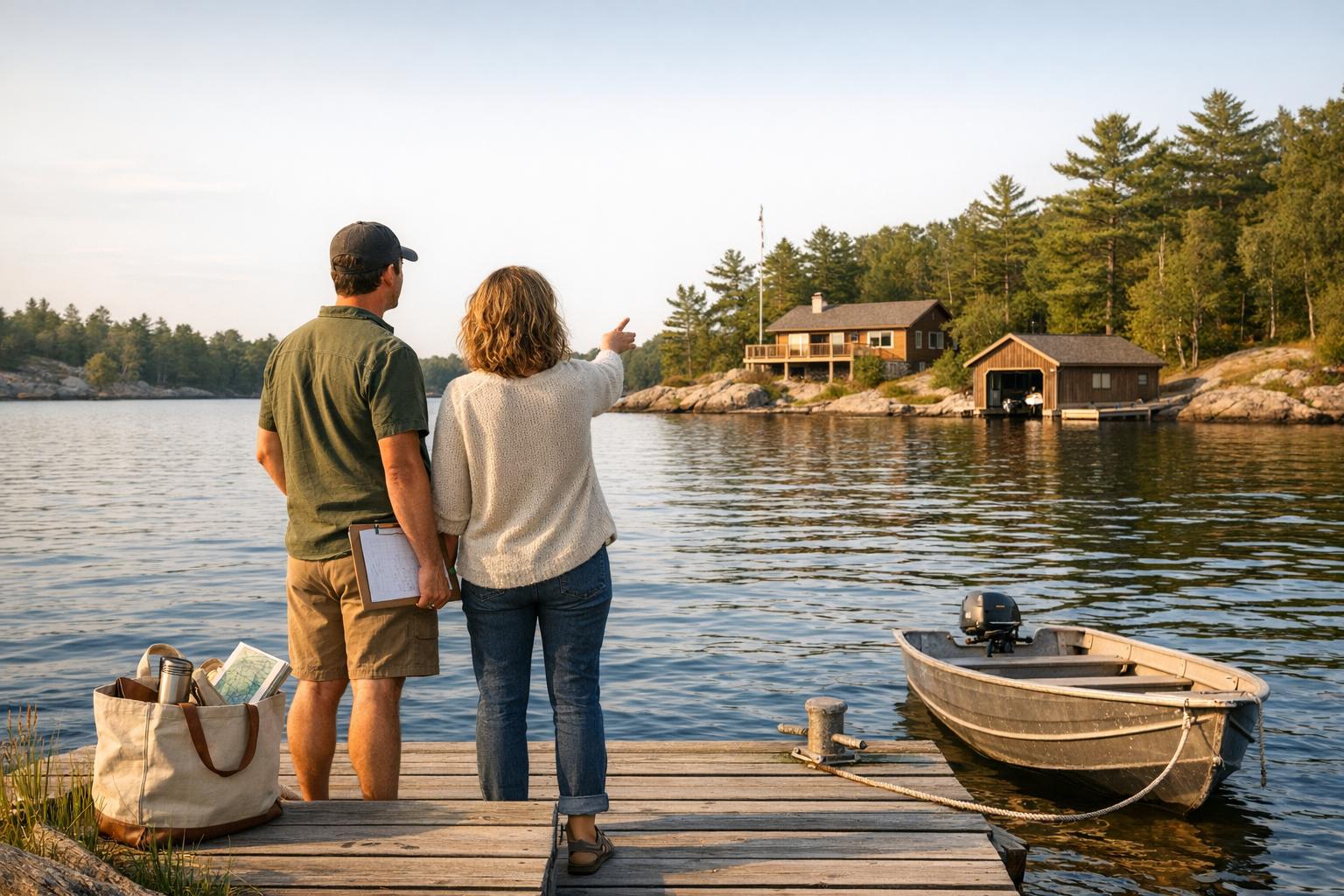
Buying a Muskoka cottage in 2026 is a big decision with unique challenges. Here's what you need to know upfront:
- Budget Wisely: Beyond the purchase price, annual costs for a $1M–$1.5M cottage range from $18,000 to $35,000. Higher-end properties can cost $35,000–$70,000+ annually. Factor in taxes, insurance, septic maintenance, and seasonal expenses like snow removal and dock storage.
- Research the Lake: The Big 3 lakes (Muskoka, Rosseau, Joseph) offer great boating and resale potential but come with higher costs and risks like wave damage. Smaller lakes are quieter and often more affordable.
- Legal Access: Verify deeded access, road conditions, and winter accessibility. Private road fees can range from $300 to $1,200 annually.
- Septic Compliance: Ensure the system meets current regulations. Replacing one can cost $20,000–$40,000+.
- Understand Zoning: Shoreline setbacks, building restrictions, and rental rules vary by municipality.
- Test the Lifestyle: Rent a cottage first to understand seasonal costs and property maintenance needs.
- Work with Local Experts: A knowledgeable agent can help navigate zoning, infrastructure, and hidden costs.
- Consider Minor Updates: Cottages needing cosmetic changes often offer better value than turn-key properties.
- Inspect Thoroughly: Professional inspections for septic systems, docks, and infrastructure are a must.
- Plan for Long-Term Maintenance: Annual upkeep costs can add up quickly, so prepare for expenses like tree removal, snow clearing, and heating.
Key takeaway: Focus on location, waterfront quality, and sun exposure - these are permanent features. Everything else can be improved later.
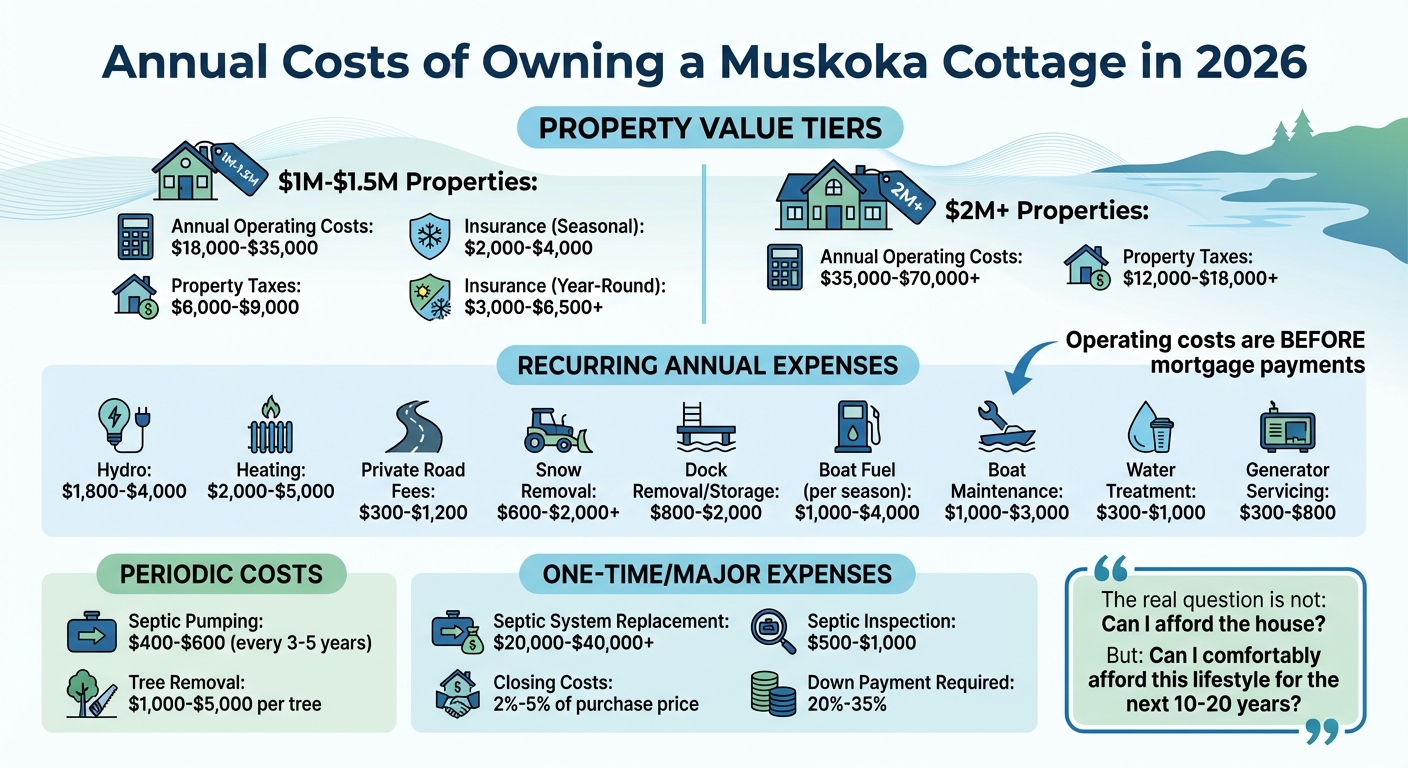
Annual Costs of Owning a Muskoka Cottage: Complete Budget Breakdown
1. Set a Realistic Budget and Account for Hidden Costs
Budget Considerations, Including Hidden Costs
Owning a Muskoka cottage involves more than just the purchase price. For a waterfront property priced between $1 million and $1.5 million, annual operating costs typically range from $18,000 to $35,000 - and that’s before considering your mortgage payments[1]. For higher-end properties valued at $2 million or more, these costs can climb to $35,000–$70,000+ per year[1].
Property taxes are a major factor. A $1 million waterfront cottage may require $6,000 to $9,000 annually in taxes, while luxury properties can see tax bills of $12,000 to $18,000+ per year[1]. These amounts depend on MPAC assessments and municipal rates in areas like Bracebridge, Gravenhurst, and Huntsville. Insurance costs also vary significantly: seasonal cottages typically cost $2,000 to $4,000 per year, while year-round waterfront homes range from $3,000 to $6,500+, depending on factors like proximity to fire services and the type of water system (lake intake or well)[1].
Most Muskoka properties are off-grid, meaning additional expenses for maintaining private systems like septic tanks, wells, and heating. Expect annual costs such as:
- Hydro: $1,800–$4,000
- Heating: $2,000–$5,000
- Septic pumping: $400–$600 (every three to five years)
Replacing a septic system can cost $20,000 to $40,000+, so a pre-purchase inspection - priced between $500 and $1,000 - is a wise investment[1].
"The real question is not: 'Can I afford the house?' But: 'Can I comfortably afford this lifestyle for the next 10–20 years?'"
- Lisa Selvage, Agent[1]
Beyond operational costs, lifestyle expenses can add up quickly. Boating enthusiasts, for example, should budget for fuel ($1,000–$4,000 per season) and maintenance ($1,000–$3,000 annually)[1]. Other recurring costs include private or shared road fees ($300–$1,200/year), snow removal for year-round access ($600–$2,000+ per season), dock removal and storage ($800–$2,000 annually), and shoreline or tree maintenance, which can cost $1,000 to $5,000 per tree[1].
Closing costs are another key consideration, adding 2% to 5% of the purchase price for expenses like land transfer taxes, legal fees, and utility adjustments[4]. Down payments in Muskoka are often higher than for primary residences, typically requiring 20% to 35%[4].
Understanding these costs ensures you’re prepared not just for the purchase but for the long-term financial commitment of cottage ownership. With this foundation, you’ll be ready to dive into local resources and regulations in Tip 2.
sbb-itb-3828479
2. Research the Lake Before You Buy
Local Knowledge and Expertise
Knowing the unique characteristics of Muskoka's lakes is just as important as budgeting for hidden costs when buying property. The Big 3 lakes - Lake Muskoka, Lake Rosseau, and Lake Joseph - are the region's main spots for boating, offering extensive water access and strong resale potential over time [2]. However, properties on these larger lakes often face higher wave exposure and greater risks from ice damage compared to more sheltered bays or smaller riverfront options [1]. If you're after a quieter, lower-maintenance lifestyle, properties in calmer bays or along rivers might be a better fit. These locations typically come with lower shoreline repair costs but may have limited boating access [1].
Smaller lakes can be a great alternative, often assessed 10–25% lower than the Big 3, which could mean tax savings and a more peaceful atmosphere [1][2]. Your choice of lake will shape your experience. For instance, boating enthusiasts often gravitate toward the Big 3, while those looking for tranquillity might prefer smaller lakes like Lake of Bays, known for its 60 kilometres of rugged shoreline and authentic village charm [7].
"Big-lake exposure on Lake Rosseau or Lake Joseph can mean higher wave action compared to sheltered riverfront properties." - Lisa Selvage, Agent [1]
Property Condition and Accessibility
Once you understand the lake's features, it's time to assess the property's physical attributes and accessibility. Look for natural, weed-free shorelines with sufficient water depth and south- or west-facing exposures to enjoy plenty of daylight and stunning sunsets [2][5]. Natural shorelines are not only visually appealing but also play a crucial role in maintaining the lake's health. The first 20 metres of land near the water are key for preventing erosion, filtering runoff, and supporting fish and wildlife habitats [5].
If the property includes a boathouse - even one in poor shape - consider its potential value. With new permitting restrictions in Muskoka, building a new boathouse is often not an option, especially enclosed boathouses over the water, which are no longer allowed [5]. Check if existing structures like boathouses or retaining walls are legally "grandfathered" in, as rebuilding them in their original footprint may not be permitted under current regulations [5]. Before finalizing your purchase, reach out to the Muskoka Watershed Council or the local township for environmental health data specific to the lake [5].
Legal and Zoning Requirements
Regulatory considerations are another critical factor when purchasing lakefront property. Different lakes and municipalities have varying rules that can affect what you’re allowed to build or how you can use the land. For example, Lake Muskoka spans multiple municipalities - Township of Muskoka Lakes, Gravenhurst, and Bracebridge - each with its own zoning by-laws and Official Plan [6]. Most townships in Muskoka require structures like cottages, decks, and septic systems to be set back 20 to 30 metres from the high-water mark to protect the lake’s ecosystem [5][6].
"The classification of your shoreline under provincial and municipal regulations affects what you can build, how you can use it and how the property will be valued at resale." - Jay Richardson, Broker and Owner, The Richardson Team [7]
Use the District of Muskoka's GeoHub mapping tool to explore zoning codes, flood risks, and environmental overlays for the property before making a purchase [6]. Keep in mind that many properties include a 66-foot-wide Shore Road Allowance (SRA) - a strip of land between the deeded lot and the water that’s owned by the municipality. To legally build shoreline structures, you may need to purchase this allowance [6]. Understanding these details upfront can save you from expensive surprises down the road.
3. Verify Legal Access and Road Conditions
Legal and Zoning Requirements
Making sure you have proper legal access to your property is just as critical as budgeting for its upkeep. Start by getting a current title search to uncover any registered easements, rights-of-way (ROW), or covenants tied to the property [8]. If you have deeded access, it means you own the strip of land leading to your cottage. On the other hand, a right-of-way allows you to cross someone else’s property. Be sure that any ROW is "appurtenant", meaning it transfers with the property, rather than "in gross", which only applies to the current owner [8].
It's also important to check with the local municipality about the Shore Road Allowance (SRA). This determines where you can legally place docks or boathouses and whether you can purchase the allowance [8][4]. If you're considering an island or boat-access-only property, you'll need a permanent, registered agreement for parking and docking on the mainland. This is often a requirement for securing financing from lenders [8].
Once you've sorted out the legalities, it's time to assess the physical condition of the access routes.
Property Condition and Accessibility
In Muskoka, most cottage roads are privately maintained by road associations rather than the municipality [8]. Ask for the association's agreement, bylaws, and budget documents to understand the maintenance standards and annual costs [8]. Check whether the road is plowed for winter access and confirm that emergency vehicles can navigate any steep inclines or sharp turns [8].
For water-access-only properties, it's a good idea to test the boat route from the mainland during both busy summer days and quieter times [9]. If you're planning winter visits, snowmobile access depends on ice thickness, which varies and is rarely monitored officially [9]. To avoid issues, get an updated survey or reference plan to confirm property boundaries and the exact route of your access road [8][4].
These challenges can also come with additional costs, so planning ahead is key.
Budget Considerations, Including Hidden Costs
Maintenance fees for private roads typically range from $300 to $1,200 annually, while snow removal in the winter can cost anywhere from $600 to over $2,000. Be aware of potential special assessments for major repairs as well [1][8]. If your property has informal access or is water-access-only, lenders and insurers may charge higher premiums - or even refuse coverage - because of increased fire protection risks [8][4]. To protect yourself, make your offer conditional on documented easements and confirmation from your lender and insurer about the access arrangements [8].
4. Check Septic System Compliance
Legal and Zoning Requirements
In Muskoka, septic systems must follow strict setback regulations. For example, the leaching bed must be at least 30 metres away from the high water mark or the official lake reference line. Each municipality also enforces its own zoning by-laws and Official Plan. If you’re planning to add bedrooms or expand your cottage, you might need to upgrade the septic system to meet current capacity standards. While repairs on non-compliant systems might be allowed, expansions typically require a minor variance from the Committee of Adjustment. Before making an offer, it’s a good idea to conduct a municipal record search to review past permits and confirm the system’s legal status. You can also use the District of Muskoka’s GeoHub to check for environmental overlays and septic feasibility if renovations are on your mind [6]. Once you’ve confirmed legal compliance, assess whether the system is suitable for year-round use.
Property Condition and Accessibility
Older Muskoka cottages were often built with seasonal use in mind, which means their septic systems may not be equipped for modern, year-round living [4]. As we approach 2026, buyers increasingly prefer cottages with updated, compliant systems. Turn-key, winterized properties with modern infrastructure tend to sell quickly, while three-season cottages are more likely to require major upgrades [10]. Protect yourself by making your offer conditional on a professional septic inspection, which typically costs $500–$1,000. Also, ask to review pumping records to get a clearer picture of the system’s history [1][4].
Budget Considerations, Including Hidden Costs
Understanding septic system costs is key to planning ahead. A complete system replacement can range from $20,000 to over $40,000, while routine pumping typically costs $400–$600 every three to five years. If the system needs upgrades, consider negotiating a 6%–7% discount on the property price [1][10]. Keep in mind that permitting timelines for septic upgrades in Muskoka are getting longer each year, so having a compliant system in place can be a major advantage.
5. Review Zoning and Lot Restrictions
Legal and Zoning Requirements
In Muskoka, owning a waterfront property means navigating strict zoning rules that dictate what you can and can't do. For instance, primary dwellings must usually sit 20 to 30 metres back from the high water mark, and many municipalities restrict structures within the first 60 metres of shoreline to cover no more than 10% of the lot area [6]. If you're eyeing a property for short-term rental income, pay attention to local regulations. In Huntsville, you must own the property for at least a year before applying for a short-term rental licence, and the town has capped licences at 250, with 224 already issued for 2026 [12]. Meanwhile, in the Township of Muskoka Lakes, annual licences are mandatory for short-term rentals, and starting in May 2026, new rules will enforce a "Summer Monthly Break", requiring rentals to pause for one week in June, July, and August [11].
Another factor to consider is the public shore road allowance. Many waterfront lots include a 66-foot-wide strip of land owned by the municipality, separating the lot from the water. Check your property survey to see if this applies, as you may need to buy this land before building docks or other shoreline structures [6]. Dock regulations are equally precise - total dock width can't exceed 25% of your lot's frontage, and some areas require at least 60 metres of frontage to build a boathouse [6]. Knowing these rules ahead of time can save you from unexpected hurdles and expenses after your purchase.
Property Condition and Accessibility
Zoning laws aside, the condition of any existing structures on the property is another critical factor. Older cottages often sit closer to the water than current regulations allow, thanks to "grandfathered" rights. While you can usually repair these structures, expanding them or increasing their size will likely require a variance, which involves approval from the Committee of Adjustment [6]. Before submitting an offer, use tools like the District of Muskoka's GeoHub mapping service to spot any environmental overlays, flood risks, or wetland protections. Scheduling a pre-consultation meeting with municipal planners can also help you sidestep costly surprises after the deal closes [6].
Budget Considerations, Including Hidden Costs
When planning your budget, don't overlook the fees tied to short-term rentals and zoning variances. In Huntsville, short-term rental licences range from $750 to $1,000, with renewal fees between $375 and $750. Operating without a licence in the Township of Muskoka Lakes comes with hefty fines, starting at $5,000 and climbing to $60,000 for repeat violations [11][12]. If your plans include expanding or building closer to the water, account for the costs and delays of applying for a variance [6]. These hidden costs can add up quickly, so it's wise to factor them into your financial planning when considering any waterfront upgrades or new builds.
Before You Buy a Cottage: WATCH THIS First | Muskoka Waterfront Tips
6. Test the Lifestyle by Renting First
Exploring the Muskoka lifestyle through a rental experience is a smart way to get a feel for day-to-day living while uncovering potential hidden costs and challenges.
Budget Considerations, Including Hidden Costs
Renting a cottage in Muskoka before buying allows you to experience the financial realities of waterfront living. Beyond the mortgage, there are operating expenses like taxes, insurance, utilities, heating, and seasonal costs such as boat fuel and dock maintenance. These can add up quickly and vary throughout the year, offering a clearer picture of the actual costs involved.[1]
"Waterfront ownership - especially here in Muskoka - isn't just about qualifying for the mortgage. It's about understanding what it truly costs to live well on the water… in all four seasons."
- Lisa Selvage, Agent[1]
This rental period helps you prepare for the financial commitment and sets expectations for managing the property year-round.
Property Condition and Accessibility
Renting during different seasons reveals how the property holds up under varying conditions. For example, a winter rental can highlight whether roads are municipally maintained or require private snow clearing, as well as any shared maintenance fees for access roads. It’s also a chance to evaluate critical systems like the septic system, water filtration, and backup generator - essential features that may need upgrades or repairs.[1]
These insights can save you from unexpected surprises and help you assess the practicality of the property for year-round use.
Local Knowledge and Expertise
Spending time at a rental cottage also gives you a deeper understanding of what makes Muskoka living special. For instance, cottages on the Big 3 lakes - Muskoka, Rosseau, and Joseph - are highly sought after, especially those with south- or west-facing views, as they offer more sunlight throughout the day.[2] Renting allows you to evaluate key features like the shoreline. Is it sandy and swimmable? Does it have enough depth for boating? Does the natural tree coverage provide adequate privacy? You’ll also notice how wave action impacts the dock and shoreline, which can translate into maintenance costs ranging from $1,000 to $5,000 annually.[1]
"What you can't change is the land, location, view. Focus on what you can't change when buying and then think about changing anything you don't like."
- Laura Stevens, Broker[2]
7. Work with Seth Drabinsky Realty for Local Expertise
Navigating Muskoka's waterfront real estate market requires a deep understanding of the region. Seth Drabinsky Realty offers years of experience in buying, selling, and renovating cottages across Lake Muskoka, Lake Rosseau, Lake Joseph, and over 100 nearby lakes. This expertise is key to assessing properties and managing ownership costs effectively.
Local Knowledge and Insight
The municipality where your property is located can have a big impact on your annual expenses. For example, larger lakes like Rosseau and Joseph often bring challenges like higher wave action and more ice damage, which can increase maintenance costs. Seth Drabinsky Realty uses their local knowledge to help you anticipate and manage these factors. Their property assessments and tailored advice can guide you in planning your budget with confidence.
Budgeting for Hidden Costs
Owning a waterfront property includes more than just the purchase price. Expenses such as hydro, heating, snow removal, boat maintenance, fuel, and insurance add up quickly. Seth Drabinsky Realty helps you map out these costs so you’re fully prepared.
Insurance premiums, for instance, depend on factors like proximity to fire services, water access, and the condition of key systems. Year-round waterfront homes typically cost $3,000 to $6,500 or more annually to insure, while seasonal cottages range from $2,000 to $4,000 [1].
Legal and Zoning Considerations
Muskoka cottages fall under various municipal jurisdictions, such as the Township of Muskoka Lakes, the Town of Gravenhurst, and the Town of Bracebridge. Each has its own zoning by-laws and Official Plan. For example, primary dwellings often require a 20- to 30-metre setback from the high water mark, while septic systems need about 30 metres of separation. Some properties also include public shore road allowances that must be closed and conveyed before shoreline work can begin.
Older cottages closer to the water may be classified as "legal non-complying", meaning repairs are allowed, but expansions could require a minor variance [6]. Seth Drabinsky Realty’s expertise ensures you’re aware of these legal details, protecting your investment and avoiding costly surprises.
Assessing Property Condition and Accessibility
Access to your property is a critical factor. Knowing whether a property is on a private road, shared road, or seasonal cottage road can help you determine winter accessibility and predict maintenance fees, which typically range from $300 to $1,200 annually. Seth Drabinsky Realty can confirm road agreements and evaluate whether a property is suitable for year-round living, which is crucial for maintaining resale value.
Pre-purchase inspections are another essential step. A septic inspection, for example, costs between $500 and $1,000 but could save you from unexpected replacement costs that might exceed $40,000. Other key infrastructure elements - like backup generators, water filtration systems, and docks - should also be reviewed, especially for properties outside municipal service areas [1].
"When you understand the full picture, waterfront ownership becomes far more enjoyable - and far less stressful."
- Lisa Selvage, Agent [1]
With Seth Drabinsky Realty’s local expertise, you’ll be well-prepared to navigate Muskoka’s unique cottage market with confidence and ease.
8. Look for Properties Needing Minor Updates
Buying a cottage that requires only minor cosmetic updates can be a smart way to balance affordability with immediate usability. Turn-key cottages often come with hefty price tags and tend to sell quickly, while properties needing a bit of work usually stay on the market longer - often over 45 days. This extra time can create room for negotiation, with buyers potentially securing a price reduction of about 6% to 7%, especially considering Muskoka's current sale-to-list ratio of approximately 93.5%–94% [10].
Budget Considerations and Hidden Costs
With high-end construction projects at their lowest levels in a decade and permitting processes taking longer each year, purchasing a nearly finished cottage is often more economical than building from scratch or tackling major renovations [10]. Given that average waterfront properties on Muskoka's Big Three lakes hover around $4.1 million, the goal should be to find a cottage where you can invest in thoughtful updates to build equity, rather than paying top dollar for a flawless property [10].
"Replacement cost is your strongest argument. With high-end construction starts at decade lows and permitting timelines stretching longer each year, purchasing a finished, premium estate is often more cost-effective - and significantly faster - than building new."
- Jack Janssen, The Janssen Group [10]
When hunting for the right property, prioritize features that can't be changed, like gentle terrain, privacy, water quality, and optimal sun exposure. Kitchens, bathrooms, and decks can be upgraded over time [2]. Even a boathouse in poor condition can be a valuable asset, as zoning restrictions often allow for repairs or replacements of existing ones, even if new construction is prohibited [2].
By focusing on cosmetic updates, you can enhance long-term value and make your investment more resilient. Before finalizing a purchase, arrange for a professional septic inspection (typically $500–$1,000) to assess hidden systems like plumbing and wiring. Keep in mind that replacing a failing septic system could cost anywhere from $20,000 to $40,000 or more [1]. Additionally, confirm the property is winterized for year-round use by checking insulation, heating systems, and road access [3].
Lastly, protect your investment by scheduling a comprehensive professional inspection to ensure the property’s overall integrity.
9. Get a Complete Professional Inspection
A thorough professional inspection is essential, especially since most Muskoka cottages rely on private systems. Your inspector should examine critical areas like septic systems, well water pumps, filtration equipment, shoreline stability, and dock safety. Having local expertise is crucial to understanding the unique challenges of the region.
Local Knowledge and Expertise
Choose an inspector with experience specific to Muskoka. For instance, cottages on Lake Rosseau might face different risks from ice damage compared to those on sheltered rivers. A local expert can spot these differences right away. They can also evaluate how local regulations impact older septic systems near shorelines and determine if structures like boathouses are protected under current zoning rules. This regional knowledge ensures a more accurate understanding of the property's condition.
Property Condition and Accessibility
Be sure to assess the state of electrical wiring, plumbing, and secondary heating systems, as these directly affect safety and insurance costs.
"Insurance cost often reflects infrastructure quality. Updated electrical, modern septic, and good access can significantly lower premiums."
- Lisa Selvage, Agent
Additionally, the inspector should verify road access and evaluate the safety of alternative heating options, such as wood stoves.
Budget Considerations, Including Hidden Costs
Dedicated septic inspections, which typically cost between $500 and $1,000, can help you avoid replacement costs that range from $20,000 to $40,000. A properly maintained septic system can last for decades, while neglect can lead to expensive surprises. Also, plan for dock repairs and yearly water treatment maintenance, which can cost anywhere from $300 to $1,000 [1]. If you’re planning to use the cottage year-round, ensure the inspection includes insulation quality and the reliability of backup generators to avoid winter challenges. This process not only protects your investment but also helps you plan for future upkeep.
10. Plan for Maintenance and Future Renovations
Owning a Muskoka cottage comes with responsibilities that extend beyond the initial purchase. These properties endure tough seasonal weather and rely on private systems that demand regular care. Being prepared for ongoing maintenance and future upgrades is key to avoiding unexpected financial burdens.
Budget Considerations, Including Hidden Costs
Maintaining a waterfront property can be expensive. As mentioned in Tip 1, annual operating costs range from $18,000 to $70,000+, depending on the property’s value.
"For a $1M–$1.5M waterfront property, a reasonable annual operating estimate: $18,000–$35,000/year. Not including mortgage."
- Lisa Selvage, Agent, Be In Muskoka [1]
In addition to utilities, there are recurring expenses to account for, such as:
- Septic pumping: $400–$600 every three to five years
- Dock removal and storage: $800–$2,000 annually
- Tree removal: $1,000–$5,000 per tree
- Snow removal: $600–$2,000+ per season
- Water treatment maintenance: $300–$1,000 annually
- Generator servicing: $300–$800 per year [1]
These costs highlight the importance of planning not just for day-to-day maintenance but also for future upgrades.
Legal and Zoning Requirements
Before starting any renovations, it’s essential to understand current zoning laws and what’s allowed on your property. Older cottages may have features that are "grandfathered in", such as boathouses. These can often be repaired or replaced, even if new construction of the same type isn’t permitted [2]. However, zoning factors like shoreline setbacks, building height limits, and lot coverage restrictions can influence your renovation plans. Keep in mind that environmental regulations may also require costly upgrades, especially if your septic system is close to the shoreline [1].
Property Condition and Accessibility
When planning renovations, focus on features that can’t be altered - such as the location, quality of the waterfront, and sunset views. Updates to kitchens, bathrooms, and decks can follow [2]. If the property needs significant work before it’s move-in ready, ensure you budget for both the costs and the time required to modernize outdated areas [3]. Large infrastructure projects, like installing a new septic system ($20,000 to $40,000+) or shoreline stabilization ($5,000 to $50,000), demand careful advance planning [1].
For additional support, Seth Drabinsky Realty offers renovation consulting services. Their local expertise can help you prioritize upgrades and provide accurate cost estimates, ensuring that each improvement adds to your property’s value.
Conclusion
Following these 10 tips lays a strong groundwork for an unforgettable Muskoka cottage experience. Purchasing your first Muskoka cottage in 2026 is more than a financial decision - it's a lifestyle choice. Success in this venture requires thoughtful planning and the guidance of local experts to navigate challenges like septic systems, road access, zoning rules, and seasonal upkeep.
Focus on the elements you can't change - think location, waterfront quality, and views. These are the core features that define your property's value. As for things like kitchens, bathrooms, or cosmetic updates? Those can be tackled later. As Laura Stevens, Broker, wisely advises:
"What you can't change is the land, location, view. Focus on what you can't change when buying and then think about changing anything you don't like" [2].
This approach ensures that your investment matches your long-term goals, whether you're dreaming of creating family memories, enjoying year-round access, or building equity in one of Ontario's most desirable regions.
For expert guidance, turn to Seth Drabinsky Realty. Their deep knowledge of Muskoka's unique market, combined with renovation advice and practical insights, helps you assess everything from shoreline characteristics to infrastructure expenses. This ensures your decisions align with both your budget and lifestyle.
Keep in mind that owning waterfront property is a 10–20 year commitment. As Lisa Selvage, Agent, aptly puts it:
"Waterfront living isn't about stretching. It's about breathing easier. When the numbers align with your income, goals, and long-term comfort, the experience is extraordinary" [1].
Use these insights to secure a property that supports your lifestyle aspirations for years to come, allowing you to enjoy your investment without unwelcome surprises.
FAQs
What should I ask my lender about financing a Muskoka cottage?
When considering a recreational property, it’s crucial to discuss financing options with your lender. Ask about traditional mortgages, cottage loans, or home equity lines of credit (HELOCs) that are specifically designed for properties like these. Make sure to confirm whether they provide loans for seasonal or vacation homes, as not all lenders offer this, and find out the required down payment to secure favourable interest rates.
It’s also important to go over the additional costs that come with owning a recreational property. These might include property taxes, insurance premiums, and potential renovation expenses. Ensure these costs fit within your financial plans and overall budget.
Finally, check if your lender has experience working in the Muskoka real estate market. Familiarity with the area can sometimes influence the terms and conditions of your financing, giving you an edge in navigating this unique market.
How do I confirm a shoreline structure is legally “grandfathered”?
To determine whether a shoreline structure in Muskoka is legally "grandfathered", start by confirming it adhered to the regulations in place at the time it was built. This means checking original permits, zoning bylaws, and setback requirements from that era. You can consult historical records through local municipal planning departments or seek advice from a qualified land use planner to verify its compliance with past legal standards.
Which inspections should I book before removing conditions?
Before finalizing the purchase, schedule inspections for the property's structure, water systems, electrical and heating systems, and outdoor features. Important areas to examine include the foundation, roof, septic system, well pump, heating system, shoreline, and driveway. These checks are essential for identifying any problems that could impact the property's value or functionality, particularly in the case of a seasonal cottage.
Frequently Asked Questions
What is the difference between buying on a big Muskoka lake versus a smaller lake?
The Big 3 lakes — Muskoka, Rosseau, and Joseph — offer extensive boating and strong resale demand, but come with higher prices, greater wave exposure, and more shoreline maintenance costs. Smaller lakes tend to be assessed 10–25% lower, are quieter, and often suit buyers who prioritize privacy and a lower-maintenance lifestyle over open-water boating.
Can I rent out my Muskoka cottage as a short-term rental?
It depends on which municipality the property falls under. Huntsville has capped short-term rental licences and requires at least one year of ownership before applying, while the Township of Muskoka Lakes now mandates annual licences and enforces rental pause weeks in summer. Checking local rules before you buy is essential if rental income is part of your plan.
Is a water-access-only cottage harder to finance and insure?
Yes — lenders and insurers often treat water-access-only properties as higher risk because of limited fire protection response and restricted access, which can mean higher premiums or outright refusals. You'll typically need a registered mainland parking and docking agreement in place before most lenders will approve financing.
What does 'legal non-complying' mean for an older Muskoka cottage?
It means the structure was built legally under older rules but no longer meets current setback or zoning requirements. You can usually repair or maintain it, but any expansion or significant change will require a variance from the Committee of Adjustment — which adds time, cost, and uncertainty to renovation plans.
When is the best time of year to buy a Muskoka cottage?
Late fall and winter tend to offer more negotiating room because buyer activity drops and properties that haven't sold through the busy summer season often see price reductions. The tradeoff is that you're evaluating waterfront features — shoreline depth, sun exposure, wave action — without seeing them at their best, which is why working with a local specialist who knows the lakes year-round matters.