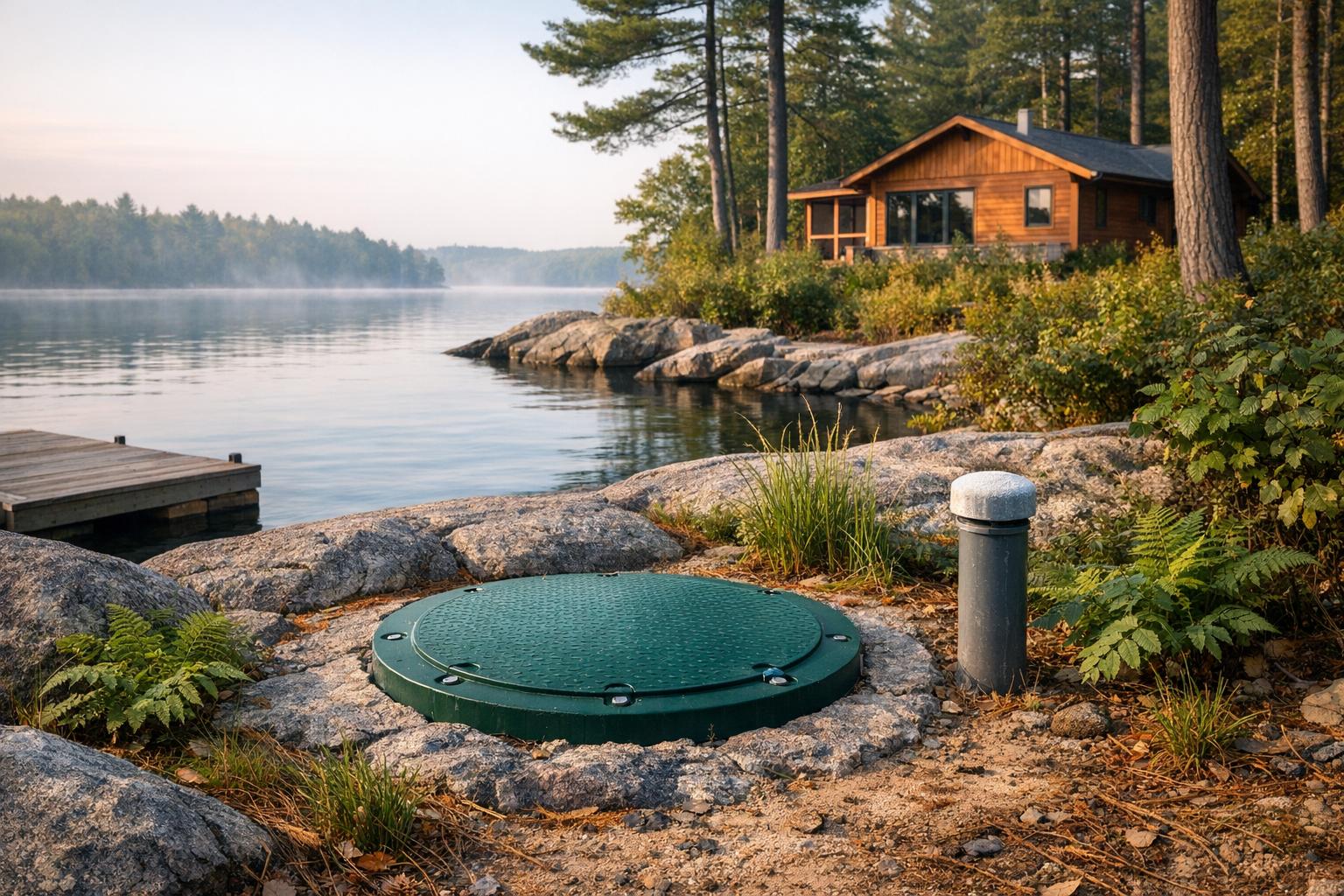
Septic system problems in Muskoka cottages can lead to costly repairs and environmental concerns, especially given the region's rocky terrain, shallow bedrock, and proximity to lakes. Common issues include sewage backups, bad odours, slow drains, and unusually lush grass over drain fields. These problems often signal system failure, which can harm local water quality by increasing phosphorus levels, leading to algae growth.
Quick tips for Muskoka cottage owners:
- Spot warning signs early: Look for bad smells, standing water, or slow drainage.
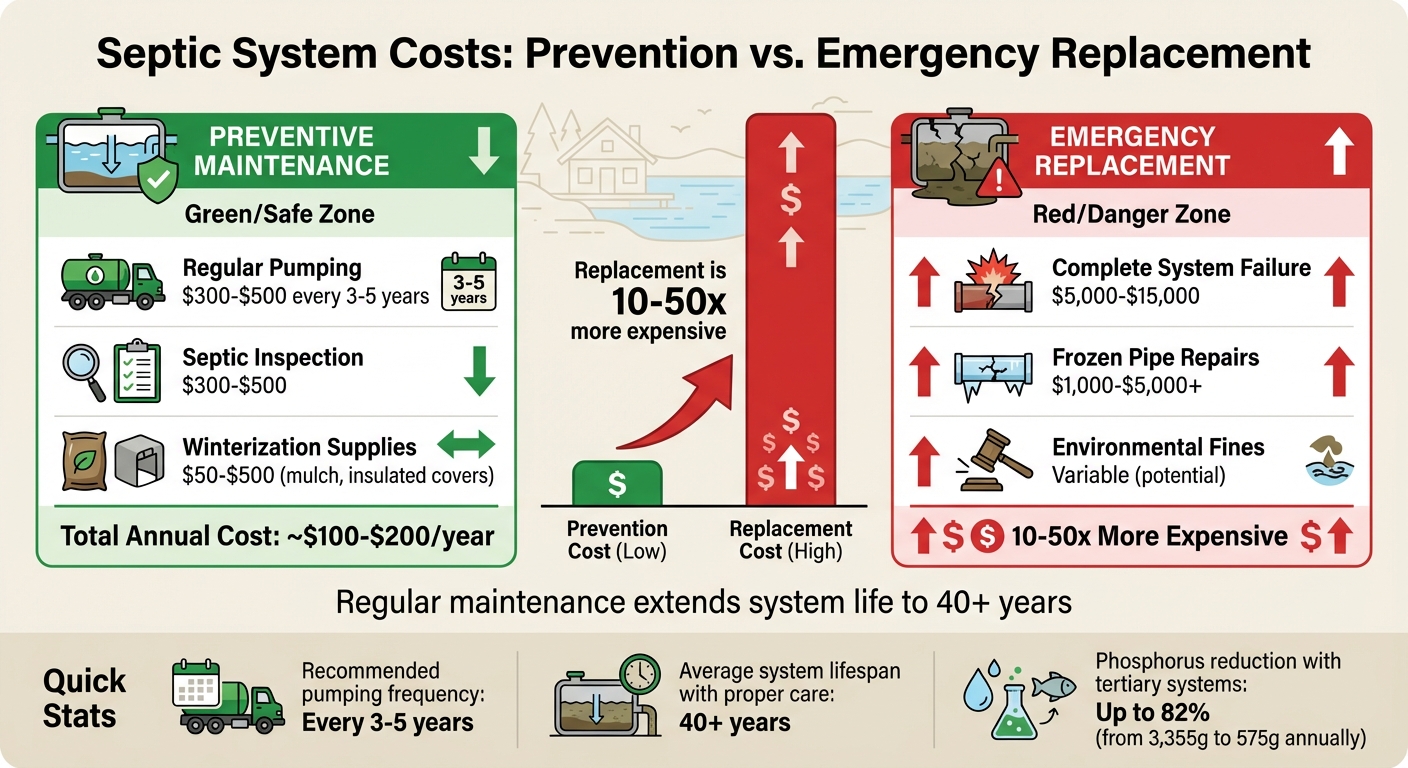
- Regular maintenance: Pump your septic tank every 3–5 years; this costs $300–$500, compared to $5,000–$15,000 for replacements.
- Winter preparation: Insulate pipes and tanks with mulch or snow to prevent freezing.
- Upgrade outdated systems: Modern systems like tertiary treatment units help reduce phosphorus contamination.
- Follow regulations: Ensure compliance with Ontario Building Code and municipal permits, especially for renovations or expansions.
Taking proactive steps can save money, extend your system's life, and protect Muskoka's lakes.
Septic System Maintenance Costs: Prevention vs Replacement in Muskoka
Septic Tank Maintenance for Homeowners
sbb-itb-3828479
Warning Signs of Septic System Problems
Spotting problems early can save you from expensive repairs and protect the environment. Septic system issues often creep up slowly, but ignoring them could lead to complete failure. In Muskoka, where the terrain is challenging and regulations are strict, keeping an eye out for these warning signs is especially important. Here are some common early indicators to help you address problems before they escalate.
Sewage Backups and Bad Odours
If you notice foul sewage smells near drains, the septic tank, or the drain field, it’s a red flag that waste isn’t flowing as it should [4][5]. These odours often show up before more visible issues arise. Inside your cottage, sewage smells near floor drains or bathtubs may signal an overflowing tank or a clogged drain field. Raw sewage backing up into sinks or tubs is a serious emergency that needs immediate attention. Seasonal systems used year-round are particularly prone to failure. Gurgling sounds from drains or toilets are another clue that the system might be clogged or overloaded.
Unusually Green Grass Over Drain Fields
If one area of your lawn is looking unnaturally lush, it could be a sign of a septic leak. Leaking wastewater acts like a powerful fertilizer, causing abnormal grass growth. As Harris Plumbing Inc. warns:
"If your lawn's looking suspiciously healthy in one spot, it's time to get a septic professional to check things out."
Older systems (25 to 30 years or more) are especially vulnerable because a natural biomat can form in the trenches. This buildup reduces the soil’s ability to absorb wastewater, potentially causing effluent to surface. In Muskoka, where phosphorus levels are closely monitored, these leaks can also harm nearby lakes and ecosystems [1][2].
Slow Drains and Standing Water
Standing water around your septic tank or drain field is a clear sign of trouble. The Muskoka Window and Door Centre notes:
"An additional sign that your septic is starting to go (this usually happens before you see puddles and backups) is if you walk over your septic bed and the ground is soggy during the height of the summer."
When the ground feels spongy or soggy, it means wastewater isn’t being absorbed properly. Muskoka’s high water tables, especially during spring thaw or after heavy rain, can make this issue worse. Slow-draining sinks, showers, or toilets are another warning that your system is struggling. To ease the load, try spreading out laundry and dishwasher use over the week instead of doing it all at once.
For perspective, a standard septic inspection in Ontario costs between $300 and $500 [4]. If the system fails completely, replacement costs can range from $5,000 to $15,000 [2].
Fixing Drainage and Percolation Problems
Addressing drainage problems is crucial to avoid the types of system failures mentioned earlier. When a septic system struggles to absorb wastewater effectively, it’s a sign of a percolation issue. These challenges often arise in areas with rocky terrain or high water tables, especially near shorelines. Fortunately, with proper testing and modern upgrades, even difficult properties can overcome these obstacles.
Soil Percolation Testing and Tailored Solutions
A soil percolation test is the first step in identifying drainage problems. This test measures how quickly water moves through the soil. In some cases, restrictive rock layers can block wastewater absorption, causing effluent to surface or even seep into your cottage [6]. Similarly, if the soil under the drainfield is saturated due to a high water table - a common issue near shorelines - sewage may not be treated properly before it reaches the groundwater [6].
David Lindbo, a professor at NC State Extension, highlights this issue:
"The location of a seasonal high water table or a restrictive layer (such as hard pan or rock) determines the depth below the soil surface that the bottom of the drainfield trenches can be placed." [6]
For properties with poor percolation, solutions like raised bed systems or tertiary treatment units can be highly effective. These advanced systems are designed to protect local lakes by minimizing phosphorus contamination. Tertiary treatment systems offer enhanced filtration and may include phosphorus-binding capabilities [1]. By using specialized soils that bind phosphorus, these systems help limit algae growth. To ensure proper treatment, maintain a vertical separation of 30–46 cm (12–18 inches) below the trench [6].
Accurate soil testing provides the foundation for upgrading your system to handle modern demands effectively.
Upgrading Systems for Improved Functionality
Once you’ve assessed the soil, upgrading outdated septic systems becomes essential for reliable, year-round performance. Many older cottages still rely on systems built decades ago for seasonal use, which can’t keep up with modern appliances and full-time living [5]. Standard systems are typically designed to handle 120 gallons per bedroom per day, based on two people per bedroom [6].
Upgrading these systems often requires specialized site preparation. For properties where gravity-fed drainage isn’t possible, a pump chamber with a grinder pump and alarm system can be installed. In some cases, controlled rock blasting and professional excavation are necessary to install new tanks and drainfields [3][8]. On water-access-only properties, heavy equipment and septic components must be transported by barge, adding another layer of complexity [3][8]. For example, in August 2026, Cottage Septic & Plumbing Services successfully replaced an old septic system on a challenging site with boundary limitations and wet ground conditions [8].
It’s important to note that all new septic installations or major upgrades require approved designs and permits from the local building department [3].
The Muskoka Lakes Association advises:
"If a new septic system is in your future, look for one that binds phosphorus. The best systems use special soils or have tertiary treatment technologies." [1]
Winter Preparation and Seasonal Use Issues
When it comes to Muskoka's harsh winters, getting your septic system ready is a must. Whether you're shutting down a seasonal property or living there full-time, proper winterization can save you from costly repairs. Frozen pipes or drainfields can lead to expenses ranging from $1,000 to over $5,000, while preventative steps cost as little as $50 to $500 [9].
How to Winterize Your Septic System
The secret to protecting your septic system in winter? Insulation and catching small leaks early. Start by covering your tank, pipes, and drainfield with 20–30 cm (8–12 inches) of loose mulch - like straw, leaves, or hay - during September or October. This helps retain geothermal heat [9]. Snow can act as a natural insulator, so avoid plowing or driving over the septic area. Consider using snow fencing or tall stakes to keep vehicles away [9].
Even a small leak can cause big trouble. As The Septic Guide points out:
"A tiny, steady flow is one of the most common causes of frozen septic lines... the water volume is too small to flush through the pipes and instead freezes layer by layer." [9]
To avoid this, repair leaky faucets and running toilets before the temperatures drop. For vacant properties, shut off the main water supply, drain all fixtures, and add non-toxic RV antifreeze (propylene glycol) to P-traps and toilet bowls - never use automotive antifreeze [9]. Insulated riser covers, which cost $30–$80 each, can also help by keeping cold air out of the tank [9]. If it’s time for a pump-out (recommended every 3–5 years), schedule it in September or October to ensure your tank has enough capacity and thermal mass for the winter months [9].
For those living in their cottages year-round, managing water usage is just as important as insulation.
Handling Higher Demand in Year-Round Cottages
Turning a seasonal cottage into a full-time home can put a lot of strain on septic systems that were originally designed for occasional use. As Muskoka Window & Door Centre explains:
"Many cottage owners are going to be faced with the challenge of a failing septic system designed primarily to handle only weekend and vacation use." [5]
Before making the switch, have a professional assess whether your current tank and drainfield can handle daily use and modern appliances like dishwashers [5]. For year-round residents, regular warm water usage helps prevent freezing. Running one hot laundry load or a dishwasher cycle each day during extreme cold can keep the system functioning smoothly [9]. Spread out water-heavy activities over the week to avoid overwhelming your system [9]. And don’t forget - any major upgrades will require permits and design approval from your local municipal building department [3].
Regulations and Lake Protection Requirements
Muskoka's septic system rules are designed with one key goal in mind: protecting the region's lakes. Whether you're upgrading an old system or planning a brand-new one, knowing these regulations is crucial to staying compliant and safeguarding water quality for future generations.
Shoreline Setback Rules and Permits
In Muskoka, septic installations must meet strict municipal approval requirements, including setback distances. For instance, leaching beds must be placed about 30 metres from the high-water mark, while primary dwellings need a setback of 20 to 30 metres depending on local municipal guidelines [10]. Even older systems that were "grandfathered" in can be subject to repairs or upgrades under the Ontario Building Code [1].
To avoid any surprises, it's a good idea to confirm your property boundaries with a professional survey. Many waterfront properties border an unopened public shore road allowance, meaning your lot might not extend all the way to the water's edge [10]. The District of Muskoka's GeoHub mapping tool can help identify environmental factors like wetlands or flood zones that could impact your septic placement [10]. Planning to add bedrooms or expand your cottage? You’ll likely need to install a tertiary treatment system to manage phosphorus levels effectively [10][1]. For a smoother process, schedule a pre-consultation with municipal planners. For example, Gravenhurst offers a digital portal to simplify applications [10].
Following these steps not only ensures compliance but also helps protect Muskoka's lakes from potential contamination.
Protecting Muskoka Lakes from Septic Contamination
A failing septic system isn’t just a nuisance - it can seriously damage the lakes. The Muskoka Lakes Association highlights the issue:
"The nutrients that we add to the lakes - especially phosphorous - are a major water quality problem. These extra nutrients cause excessive plant growth and the algae build-up you see on your boat's hull and along shorelines." [7]
To put it into perspective, high-phosphorus activities - like using certain fertilizers, phosphate-based detergents, or clearing trees extensively - can contribute up to 3,355 grams of phosphorus annually. In contrast, low-phosphorus practices reduce that to just 575 grams [7]. You can help by switching to phosphate-free soaps and cleaners, avoiding fertilizers near the water, and maintaining a natural shoreline buffer of at least 20 metres [1][7].
Additionally, be mindful of what goes into your septic system. Avoid flushing non-flushable wipes, grease, pharmaceuticals, or chemicals like paint and antifreeze, as these can harm the bacteria that keep your septic system functioning and contaminate groundwater [11]. Keep your drainfield free from trees and vehicles, and stay alert for warning signs like gurgling pipes or unusually lush grass patches, which could indicate a problem [7][11].
Maintenance Schedules and Replacement Planning
Taking care of your septic system can extend its lifespan to over 40 years [5]. For Muskoka cottage owners, this means balancing seasonal use with regular upkeep to avoid expensive repairs and protect your property.
Regular Pumping and Record Keeping
Septic tanks should be pumped every three to five years, as advised by the Muskoka Lakes Association:
"You should have your septic tank pumped out at least once every five years, even if it is not full. Every 2-3 years is even better." [1]
If your cottage sees heavy use during the summer months, you might need to pump more frequently to prevent overloading the system. Keeping a detailed record of maintenance and repairs is essential. These logs can help identify patterns, such as the need for more frequent servicing, which may indicate that the system is nearing the end of its functional life. Accurate records are also helpful when applying for permits or during professional assessments for renovations.
Signs like increased pumping frequency or issues with the drain field often point to system stress. Similarly, modern appliances or year-round use can strain older systems. By documenting regular maintenance now, you'll have a clear understanding of when upgrades or replacements might be necessary.
Coordinating Septic Upgrades with Cottage Renovations
Once you’ve established a solid maintenance routine, it’s a good idea to evaluate your septic system before making any major changes to your cottage. If you’re planning to add bedrooms, bathrooms, or modern appliances, a professional assessment can determine whether your current system can handle the increased water usage [5]. Upgrades should only be considered when repairs are no longer enough to meet the demands of expanded usage.
In some cases, repairing the septic bed alone can be a more affordable option than a full system replacement. However, all septic work in Muskoka requires municipal permits and must adhere to the Ontario Building Code [3]. Renovation projects also present a great opportunity to upgrade to a tertiary treatment system. These systems help protect lake water quality by reducing phosphorus levels, aligning with today’s environmental standards [1]. Professional teams can manage everything from design and permitting to excavation and installation, ensuring the work is done efficiently and meets all regulations [3].
Conclusion
Keep an eye out for septic system warning signs like sewage backups, unpleasant odours, slow drains, or unusually lush patches over your drain field. These can indicate problems that, if ignored, might lead to expensive emergency repairs and harm the water quality of Muskoka’s lakes. Faulty septic systems are a major source of increased phosphorus levels and algae blooms in the region’s waters [1].
Regular maintenance is key. Pumping your septic tank every 3–5 years and maintaining detailed records can save you from costly failures, which can range from $5,000 to $15,000 for replacements [1][2]. These records are especially useful for municipal inspections, property sales, or planning renovations that could increase water usage. Staying on top of this routine not only helps avoid surprises but also keeps you aligned with environmental regulations.
Adhering to the Ontario Building Code and municipal inspection requirements is essential for protecting your property and the health of Muskoka’s lakes [1]. Before starting renovations, confirm your septic system’s capacity to handle any increased water flow from new additions [12]. Even older, "grandfathered" systems may require upgrades if they pose risks to health or the environment [1].
For cottage renovation projects that involve septic upgrades, Seth Drabinsky Realty offers expert consulting to help you navigate the process smoothly. With hands-on experience in flipping and renovating Muskoka properties, Seth provides realistic cost estimates and connects you with reliable contractors who understand the nuances of seasonal and water-access properties.
FAQs
When should I call a septic professional vs. wait and monitor?
If you spot standing water in your yard, persistent odours, or damp patches near your septic tank, it's time to call a septic professional. Frequent pumping or recurring problems with an older system also signal the need for expert assistance. For newer, well-maintained systems without visible issues, regular inspections and pumping every 2–3 years should keep things running smoothly. Acting quickly at the first signs of trouble can help you avoid expensive repairs or potential health hazards.
How can I tell if my cottage septic is suitable for year-round use?
To figure out if your septic system can handle year-round living, start by evaluating its age, condition, and capacity. If your system is over 40 years old or has recurring problems, it might be time for upgrades. Frequent pumping or ongoing issues could be signs that the system is struggling to keep up.
It's a good idea to consult a licensed septic professional. They can assess the system’s design, check the soil conditions, and determine whether it can meet the demands of continuous use.
What permits do I need to repair or upgrade a septic system in Muskoka?
Before working on repairing or upgrading a septic system in Muskoka, you'll need to secure a septic improvement permit. This permit is issued by the local Environmental Health Department or the relevant governing authority in your area. Always review the specific regional regulations to make sure you're following the proper guidelines.
Frequently Asked Questions
How does a failing septic system affect the value of a Muskoka cottage?
A failing or outdated septic system can significantly reduce a cottage's resale value and complicate the sale process, since buyers and lenders increasingly scrutinize septic condition on waterfront properties. Replacement costs ranging from $5,000 to $15,000 or more give buyers strong leverage to negotiate, and some municipalities may require upgrades before a sale can proceed. Getting a professional inspection and maintenance records in order before listing is one of the most practical steps a seller can take.
What should I check about a cottage's septic system before making an offer?
Ask for the system's maintenance records, the last pump-out date, and whether it has ever been inspected or upgraded to meet current Ontario Building Code standards. On older or waterfront properties, confirm the leaching bed setback distance from the high-water mark and whether the system is rated for the number of bedrooms in the cottage. A licensed septic inspection before finalizing any offer is strongly worth the cost, especially on seasonal properties being converted to year-round use.
Are water-access cottages harder to deal with when it comes to septic repairs?
Yes, water-access-only properties add meaningful complexity to septic work because heavy equipment and replacement components must be transported by barge, which increases both cost and scheduling lead time. This makes proactive maintenance especially important on boat-access properties, since emergency repairs are far more logistically difficult than on road-accessible sites.
How does Muskoka's rocky terrain make septic systems different from elsewhere?
Shallow bedrock and thin soil layers limit how deep drainfield trenches can be placed, which can restrict wastewater absorption and force property owners toward raised bed systems or advanced tertiary treatment units rather than conventional gravity-fed designs. These site-specific constraints mean that not every lot can support the same system type, and a proper percolation test is essential before planning any installation or upgrade.
Do I need to upgrade my septic system if I add a bedroom to my Muskoka cottage?
Adding a bedroom typically increases the system's required daily capacity, since Ontario standards are based on the number of bedrooms, and municipalities will generally require a new or upgraded system that can handle the additional load before issuing a building permit. In many cases near the shoreline, this also triggers a requirement for a tertiary treatment system to limit phosphorus runoff into the lake.