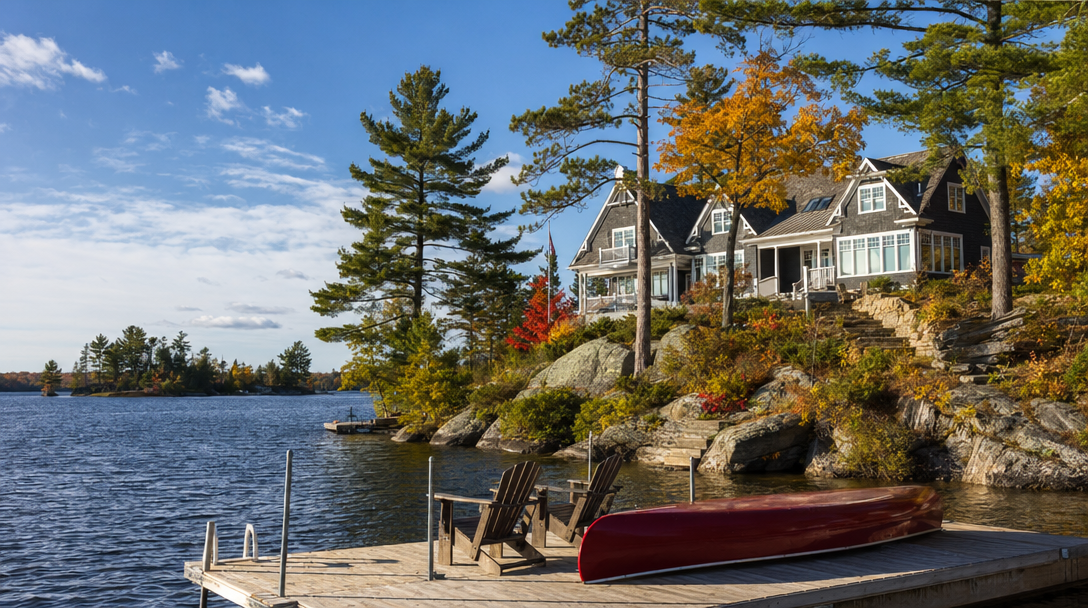
What Is the Best Time to Buy a Cottage in Muskoka?
There is no single perfect month to buy a Muskoka cottage — the right time depends on whether you value selection, negotiating room, or seeing the property in full summer use. Spring brings the most listings, summer shows the lifestyle, fall surfaces motivated sellers, and winter offers the quietest market with the clearest test of year-round usability.
Most buyers default to summer because that's when the cottage feels irresistible. But experienced Muskoka buyers know that emotional timing and strategic timing rarely line up. The seller listing in July knows the lake is at its best. The seller listing in November is usually ready to deal.
Here's the practical framing: timing is a tradeoff between five variables.
| Variable | What it means for buyers |
|---|---|
| Selection | How many cottages are actively listed |
| Competition | How many other buyers are circling |
| Seller motivation | How willing sellers are to negotiate |
| Property visibility | Whether you can assess waterfront, access, roof, septic |
| Buyer readiness | Financing, inspections, and decisions in place |
No season scores well on all five. Spring wins on selection but loses on competition. Winter wins on motivation but limits waterfront visibility. The "best time" is the season that aligns with your priorities — and your readiness to act when the right cottage appears. The rest of this guide breaks down each season, the current market context, and how property type changes the calculus.

How Do Spring, Summer, Fall, and Winter Compare for Muskoka Cottage Buyers?
Each Muskoka season produces a fundamentally different buying experience, and the right one depends on what you're optimizing for.
Spring is the busiest cottage-buying window in Muskoka. According to Laura Stevens at Laura in Muskoka, spring is the most active buying season for Muskoka waterfront real estate, with inventory increasing alongside competition — especially for desirable waterfront. Snow melts, docks come out of storage, listings flood in, and buyers who have been waiting through winter all start shopping at once. If you want the broadest selection of waterfront cottages in one window, spring is it. If you hesitate, you lose properties to faster buyers.
Summer is peak lifestyle season and peak emotion. Denise George at Deal With Denise calls summer "the peak season for real estate in Muskoka," when the lakes, weather, and recreation are all on full display. That's exactly the problem for disciplined buyers: a cottage that looks magical on a 28°C July afternoon can mask access issues, neighbour density, boat traffic, or a dock that becomes unusable in shoulder season. Prices reflect that emotional pull. Summer is the worst season to overpay and the best season to confirm whether a lake's vibe actually fits your family.
Fall is often the most underrated window. As Maggie Tomlinson at Muskoka Cottage For Sale notes, fall can be a strong time to buy — especially for three-season cottages — because owners who don't want to close up the place one more time may be more motivated to sell. Foliage also reveals shorelines, neighbouring properties, and exposure that summer leaves hidden.
Winter is the quietest, most analytical season. Fewer buyers, fewer showings, and the sellers who remain on the market through January and February usually have a reason to deal. According to Kristyn Kennedy, winter offers market advantages and seasonal value that summer rarely produces.
| Season | Inventory | Competition | Seller motivation | Best for |
|---|---|---|---|---|
| Spring | High | High | Moderate | Maximum selection, summer use |
| Summer | Moderate | High | Low | Lifestyle confirmation, lake fit |
| Fall | Moderate | Lower | Higher | Value, three-season cottages |
| Winter | Lower | Lowest | Highest | Negotiating room, four-season testing |
Tip: If you can only visit Muskoka twice before buying, make one trip in summer (to feel the lake) and one in late fall or winter (to see the road, the heating, and the bones of the property without summer's filter).
Is Winter Really a Good Time to Buy a Cottage in Muskoka?
Yes — winter is genuinely one of the smartest seasons to buy in Muskoka, but only if you understand the tradeoffs. Winter buyers face the least competition, often deal with the most motivated sellers, and get the only honest look at how a cottage actually performs in January.
What winter shows you that no other season can:
- Whether the access road is plowed, by whom, and how reliably
- How the cottage holds heat, where it leaks, and what the hydro bill actually looks like
- Whether pipes, septic lines, and the well are properly winterized
- How snow loads sit on the roof and decks
- Whether the property is genuinely usable year-round or quietly three-season
For buyers who want a four-season cottage — increasingly common among GTA families using Muskoka as a second residence rather than a July-only retreat — winter visibility is invaluable. A cottage that looks turnkey in August can reveal serious shortcomings in February.
The downsides are real. Winter inventory is thinner; some sellers pull listings rather than show in snow. Waterfront features are the hardest to assess: you can't see frontage clearly, the dock is buried, water depth is invisible, and exposure to wind and afternoon sun reads differently when the lake is frozen. For a waterfront-driven purchase, that matters.
Watch out: Buying a waterfront cottage in deep winter without ever seeing the shoreline ice-out is a common regret. If you go under contract in February, build a spring re-inspection into your conditions where possible, or at minimum review summer photos and bathymetry alongside the inspection.
The compromise most experienced Muskoka buyers use: shop seriously in winter for the negotiating leverage, but commit only to properties where you have enough information about the waterfront — through past summer photos, satellite imagery, and local knowledge — to buy with confidence.
Should You Buy in Spring Before the Busy Season Starts?
Spring works well for prepared buyers and punishes hesitant ones. Inventory rises sharply as sellers list ahead of summer, the snow clears enough to inspect waterfront and roofs, and a spring close means the cottage is yours for the entire prime season.
The catch is competition. According to Laura Stevens at Laura in Muskoka, spring brings rising inventory but also intensifying buyer demand, especially on desirable waterfront. By April and May, GTA families who decided over winter that "this is the year" are all in market simultaneously. Multiple-offer situations are far more common in spring than in fall or winter, particularly on the Big Three lakes — Muskoka, Rosseau, and Joseph.
Spring is the right season if:
- Your financing is already arranged and your deposit is liquid
- You've narrowed your lakes and towns before listings appear
- You can travel to Muskoka on short notice for showings
- You have a Muskoka-based agent ready to preview properties the day they hit
- You're prepared to make a clean, decisive offer without padding it with unnecessary conditions
Spring is the wrong season if you're still figuring out which lake, what budget, or whether you want waterfront at all. Buyers who arrive in spring still in research mode usually watch the cottages they liked sell to faster competitors, then either overpay in a panic by July or wait until fall.
The buyers who win in spring are the ones who did their homework in winter.
Fall vs. Spring: Which Season Gives Buyers the Better Advantage?
Fall and spring are the two strongest cottage-buying windows in Muskoka, and they reward opposite buyer profiles. Spring rewards selection and speed; fall rewards patience and price discipline.
Here's how they compare on the variables that actually move a deal:
| Factor | Spring | Fall |
|---|---|---|
| Inventory depth | Highest of the year | Moderate, but fresh listings continue |
| Buyer competition | High, often multiple offers | Noticeably lighter |
| Seller motivation | Mixed — many sellers test high prices | Higher — owners want to avoid winterizing |
| Waterfront visibility | Good once ice is out | Excellent — leaves drop, shoreline reveals itself |
| Three-season cottages | Less leverage | Strongest leverage of the year |
| Closing timing | Use the property all summer | Limited current-year use, full next season |
| Negotiating room | Tighter | More room on price and conditions |
Fall has a particular edge on three-season cottages. As Maggie Tomlinson at Muskoka Cottage For Sale points out, owners who don't want to close up the property one more time often become more flexible by September and October. That's the single clearest motivation pattern in the Muskoka calendar.
Spring's advantage is purely about selection. If your priority is choosing from the broadest pool of waterfront cottages on a specific lake — say you're set on Lake Rosseau or comparing [Lake Muskoka and Lake Rosseau](/lake-muskoka-vs-lake-rosseau-buyers-guide) — spring will show you more options in eight weeks than fall and winter combined.
For most buyers, the honest answer is: shop both. Use spring to understand what's available and at what price, then either move decisively in spring on a property that genuinely fits, or wait for fall and target sellers whose summer listings didn't sell.
How Does the Current Muskoka Market Affect Timing?
The 2026 Muskoka cottage market gives buyers more breathing room than they've had in years. According to Finding Your Muskoka's 2026 Review and 2026 Forecast, sales totalled 561 units in 2026 — a modest 1.4% increase from 2026, but still well below the volumes seen in stronger periods.
A subdued market changes timing in subtle but important ways:
- Properties sit longer. Cottages that would have sold in a weekend during 2021–2022 now stay listed for weeks or months. That gives buyers time to inspect, return for second visits, and negotiate properly.
- Pricing scrutiny increases. Sellers can no longer assume any price will clear. The gap between premium waterfront, mid-range cottages, and off-water properties is wider and more negotiable than during the boom.
- Due diligence is realistic again. Inspection conditions, septic reviews, and financing windows are routinely accepted rather than waived under competitive pressure.
- Seasonal patterns reassert themselves. In a hot market, every season feels like spring. In a calm market, fall and winter motivation patterns return.
By the numbers: Muskoka cottage sales reached 561 units in 2026, up just 1.4% year over year — a market with room for buyers to negotiate, not one demanding instant decisions (Source: Finding Your Muskoka).
What this doesn't mean is that prices have collapsed. The Big Three lakes continue to hold value, and well-located, properly winterized waterfront still attracts strong interest. For deeper context on what to expect at different price tiers, see our breakdown of [Muskoka cottage prices for 2026](/muskoka-cottage-prices-what-buyers-can-expect-in-2026).
What Timing Makes Sense for Waterfront, Off-Water, and Three-Season Cottages?
Timing should follow property type, because the questions each type forces you to answer change with the season.
Waterfront cottages demand open-water visibility. Frontage quality, depth at the dock, exposure to wind and afternoon sun, privacy from neighbours, weed lines, and rocky-versus-sandy entry are all things you genuinely cannot judge under ice and snow. For waterfront buyers, the ideal window is late spring through early fall — with fall offering the underrated advantage of dropped leaves revealing what summer foliage hides. Winter waterfront purchases work, but only when paired with strong summer documentation and a trusted local agent who knows the shoreline. Our guide on [waterfront vs off-water tradeoffs](/muskoka-waterfront-vs-off-water-what-buyers-should-know) walks through the specific criteria that matter most.
Off-water cottages offer the most timing flexibility. Without a shoreline to evaluate, the seasonal asymmetry largely disappears. Off-water buyers can shop confidently in winter, take advantage of lower competition, and focus inspection energy on the structure, septic, well, and access — none of which require open water. Off-water also tends to be where fall and winter negotiating leverage is strongest, because emotional summer demand is lower year-round.
Three-season cottages are the clearest fall-and-winter play. As Maggie Tomlinson notes, owners of three-season properties are often most motivated to avoid one more closing-up cycle. If you're buying a three-season cottage with the intention to eventually winterize, fall purchases give you the cold months to plan upgrades — insulation, heating, plumbing protection, road access — before next summer.
For any property type, two due-diligence items matter more than season:
- A proper [cottage inspection](/cottage-inspection-key-factors) that covers structure, roof, electrical, and access
- A focused review of [septic system condition and capacity](/muskoka-cottages-septic-issues), since septic surprises are among the most expensive post-close issues in Muskoka
How Should GTA Buyers Prepare Before the Right Cottage Hits the Market?
The buyers who land the right Muskoka cottage almost always do their preparation in the season before they buy. Here's the workflow that works for out-of-area buyers:
- Define lake and town preferences. Big Three (Muskoka, Rosseau, Joseph) buy you prestige and resale strength but cost more. Lake of Bays, Skeleton, and the smaller lakes offer different lifestyles at different price points. Our [top Muskoka lakes guide](/best-muskoka-lakes-new-cottage-owners) is a starting point.
- Clarify your driving tolerance. A property 2.5 hours from the GTA gets used. A property 3.5 hours away often doesn't. Be honest about how often you'll actually drive up in shoulder season.
- Set a real budget — including the parts that aren't the purchase price. [Closing costs](/muskoka-cottage-closing-costs-what-buyers-should-budget-for), property taxes, insurance, dock and shoreline maintenance, and seasonal services add up. A cottage you can afford to buy but not to maintain is a stressful cottage.
- Arrange financing early. Cottage financing is more nuanced than primary-residence financing — particularly for three-season properties or properties on private roads. Get pre-approved before you start writing offers.
- Decide turnkey or project. Our breakdown of [turnkey vs fixer-upper](/turnkey-vs-fixer-upper-choosing-right-cottage) covers the cost and timeline differences that catch first-time buyers off guard.
- Line up your inspection and septic professionals in advance. In a calmer market you have time, but local trades still book up. Knowing who to call shortens your conditional period.
- Work with a Muskoka-based agent who actually lives the market. Lake-by-lake nuance — which bays freeze first, which roads the township maintains, which shorelines get afternoon wind — isn't on any listing portal.
That last point is where most out-of-area buyer regret comes from. A generic agent can show you cottages. A local specialist tells you which ones are actually worth buying.
When Should You Wait Instead of Buying Now?
Sometimes the best timing decision is not buying. Wait if any of these apply:
- The cottage doesn't fit your real access needs — the road isn't year-round, the water access is harder than you'll tolerate, or the drive from the GTA is longer than you'll sustain past year two
- Waterfront quality is unclear because you've only seen the property in one season, under snow, or in photos
- Inspection or septic questions are unresolved and the seller won't extend conditions
- The price doesn't reflect the property's actual condition, lake, or frontage — pay for the lake and the land, not the seller's hopes
- You're reacting to seasonal pressure (a hot summer weekend, a fear-of-missing-out spring) rather than to a cottage that genuinely fits
The best time to buy a Muskoka cottage is when market conditions, the specific property, and your own due diligence all align — not when the calendar says so. A subdued market like 2026–2026 means you can usually afford to wait for that alignment rather than force it.
If you're weighing a specific property, comparing lakes, or trying to decide whether this season is your season, talk to Seth. As a local Muskoka specialist who lives and invests in the region, Seth gives buyers the lake-by-lake, property-by-property guidance that turns timing from a guess into a decision. Get in touch with Drabinsky Realty to start the conversation.
Frequently asked questions
Can you actually assess a waterfront cottage properly in winter or fall?
Fall is arguably better than summer for reading a shoreline — once the leaves drop, you can see neighbouring properties, exposure, and lot lines that summer foliage hides. Winter is harder for waterfront evaluation since ice covers depth, dock condition, and weed lines, so if you're buying in winter, pair the visit with summer photos, satellite imagery, and input from someone who knows that specific shoreline well.
How long are Muskoka cottages sitting on the market right now?
In the current subdued market, properties that would have moved in days during 2021–2022 are now sitting for weeks or even months, giving buyers realistic time for second visits, proper inspections, and negotiation — a meaningful shift from the pressure-driven buying conditions of recent peak years.
Does the timing advice change if I'm buying for rental income rather than personal use?
For rental-focused buyers, fall and winter purchases make particular sense because you can close, address any upgrades, and have the property ready to list for the following summer season — the highest-demand rental window in Muskoka — without losing a year of income to a rushed spring purchase.
Which Muskoka lakes are most competitive in spring, and does that affect when I should start looking?
The Big Three — Lake Muskoka, Lake Rosseau, and Lake Joseph — see the sharpest spring competition because buyer demand for those lakes is deep and inventory is limited relative to interest; if you're targeting one of them, you'll want financing arranged and lake preferences locked in before the spring listing wave hits, not after.
What's the biggest mistake buyers make when timing a Muskoka cottage purchase?
The most common regret is letting seasonal emotion drive the decision — falling in love on a perfect July weekend and skipping due diligence, or panic-buying in spring because competition felt urgent; the buyers who come out ahead are typically those who researched in winter and moved decisively when a property genuinely fit their criteria, not the calendar.
Sources
- Muskoka Cottage Market | 2026 Review & 2026 Forecastfindingyourmuskoka.ca
- Why Winter Is the Secret Season for Buying a Home or Cottage in ...www.kristynkennedy.com
- Winter vs. Summer in Muskoka: What Investors Need to Know About ...www.dealwithdenise.com
- Spring 2026 Muskoka Cottage Buying Guide: What Smart Buyers ...laurainmuskoka.com
- When is the best time of year to buy a cottage? - Facebookwww.muskokacottageforsale.ca
- Fall Can Be a Great Time To Buy or Sell in Muskokacottageinmuskoka.ca